


Screen Dimensions and Aspect Ratio
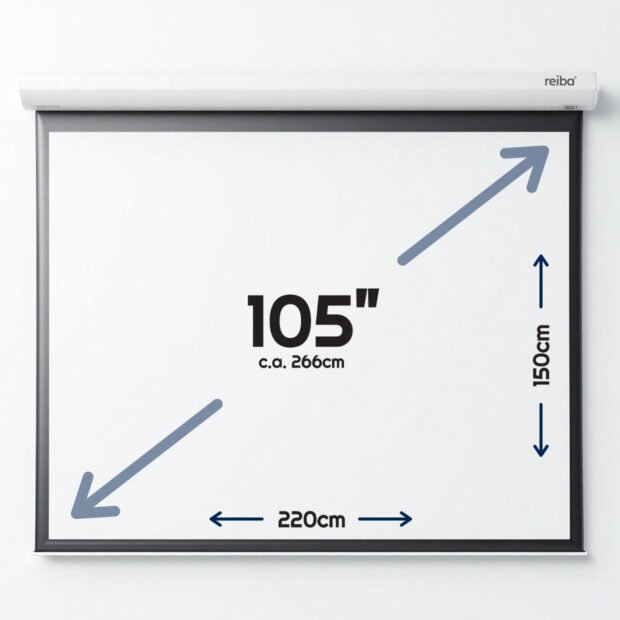
The projection screen measures 220 × 150 cm, which corresponds to a diagonal of 105 inches (approx. 266 cm) in its native format. The 4:3 letterbox aspect ratio means that when fully deployed, the entire screen surface is utilized, ensuring optimal representation of content in this proportion.
The screen also supports displaying images in other formats, such as 16:9 or 2.39:1 (CinemaScope), by partially retracting it. In such cases, the unused portion remains hidden, allowing the screen to adapt to various video materials—from classic academic films (4:3) to wide cinematic productions (2.39:1).
Projection Material – Reflon™ by reiba®
The screen surface is made of Reflon™ fabric, a patented material based on PET polyester fibers, specially designed for cinematic and studio applications. It features a reflection coefficient of gain 0.8+, meaning light is evenly distributed, minimizing hotspot effects (localized bright spots) and ensuring a wide viewing angle of up to 165°.
Reflon™ stands out due to:
- Matte surface – reduces unwanted reflections and delivers natural color reproduction.
- Dimensional stability – resistant to warping, even with prolonged use.
- Compatibility with 2D and 3D technologies – works seamlessly with DLP, LCoS, and laser projection systems.
Key feature: Reflon™’s tight weave enables 4K content reproduction without the moiré effect.


Wall Mounting
Wall mounting a projection screen ensures hassle-free readiness for projection—the screen is permanently fixed in an optimal position, eliminating the need for setup and folding before each use. This installation method drastically saves valuable floor space, especially in smaller rooms, while offering a clean, minimalist aesthetic by concealing the screen in an elegant ceiling case. A key advantage is exceptional image quality: the professional screen material provides perfect, uniform surface tension, eliminating the ripples and distortions typical of portable screens.
The fixed screen location not only enhances safety (no risk of tipping) but also allows for precise and repeatable projector positioning for optimal focus and image geometry. Integrated into the interior architecture, the cassette screen appears highly professional, serving as a discreet décor element that disappears after the screening. However, when choosing this elegant solution, it’s important to remember the need for careful preparation: verifying wall load capacity, taking precise spatial measurements, and selecting appropriate mounting hardware.


